Above-ground tank removal
Basement, crawlspace and outdoor tanks drained, cut, removed and scrapped in a single two to four hour visit, with the fuel line and vent capped off properly.
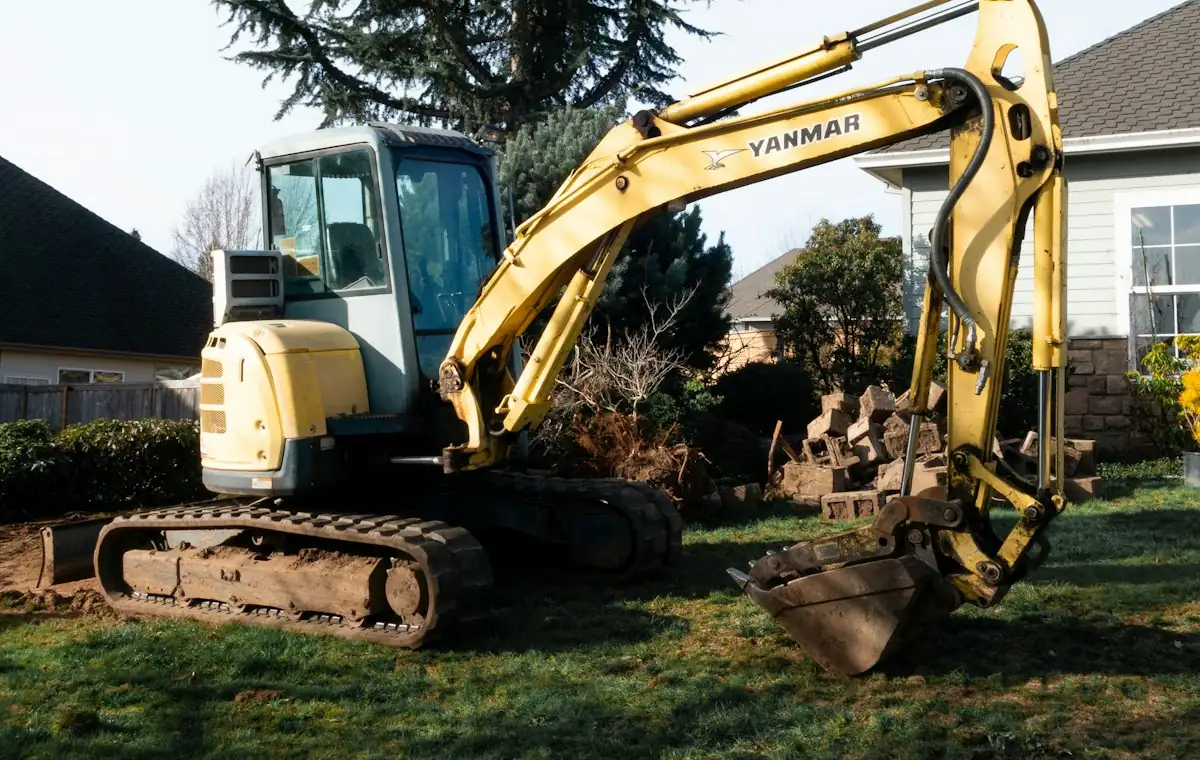
Buried tanks, basement tanks, and the paperwork your insurer keeps asking for. Licensed petroleum tank contractors serving Greater Moncton, working to Regulation 87-97 under the Clean Environment Act. Written price before anyone drives out.
Oil tank removal in Moncton costs $500 to $1,500 for an above-ground tank and $2,500 to $5,000 for a buried tank that comes out of clean ground, in Canadian dollars, and it has to be done by a registered petroleum tank contractor. That last part is not a preference. Regulation 87-97 under the New Brunswick Clean Environment Act treats a residential fuel oil tank as a petroleum storage installation, so draining, cutting and disposing of it is regulated work with a paper trail attached.
Roughly 35 percent of New Brunswick homes still heat with oil, down from about 55 percent twenty years ago. Every one of those conversions leaves a tank behind, and a large share of the properties across Moncton, Dieppe and Riverview built between 1955 and 1988 still have a buried tank in the yard that nobody has thought about in decades. It surfaces when the insurance renewal arrives, when a buyer's lawyer asks for documentation, or when somebody smells oil in the basement.
A tank in this climate is on a 15 to 20 year clock if it is steel, 20 to 25 if it is double-wall or fibreglass. Long Atlantic heating seasons and coastal humidity put water in the bottom of the tank, and water is what corrodes the shell from the inside.
We work across Greater Moncton and out through Westmorland and Albert County, and the process is the same whether the tank is standing in a basement in the north end or buried under a lawn in Riverview. Tell us what you have, get a written figure, book the date. Most jobs are finished inside one visit.
Everything below is oil tank work, not a general contracting menu. Tank removal is the whole job here, which is why a quote covers cutting, cleaning, transport and disposal instead of listing them as extras.
Six steps, and on most Moncton properties all six happen in one day. The only stage that reliably adds time is soil remediation, and you will know whether that applies within an hour of the tank coming out of the ground.
We look at the tank, the access route and the ground around it, then quote a fixed figure in Canadian dollars.
Residual oil is pumped out, the line and vent are disconnected, and the tank is cleaned until it is safe to cut.
A basement tank is cut to fit the stairs. A buried tank is excavated until the whole shell is visible.
The tank comes out, the shell is checked for perforation, and anything we find is photographed for your file.
Soil under a buried tank is sampled, and a clean result means sand backfill, compaction and surface reinstatement.
You get the decommissioning letter, the waste transfer record and the laboratory result if sampling was part of the job.
Below are the real working ranges for Greater Moncton. The figure that moves most is not the tank, it is the soil underneath it, which is why a buried tank quote is always written with a clean-ground price plus a clearly stated remediation rate rather than one optimistic number.
| Job | Typical range (CAD) |
|---|---|
| Above-ground tank, basement or outdoors | $500 to $1,500 |
| Buried tank, clean soil | $2,500 to $5,000 |
| Buried tank with soil remediation | $5,000 to $15,000 and up |
| Replacement tank installed | $2,500 to $4,500 |
| Removal plus replacement, same visit | $3,200 to $6,000 |
| Oil to heat pump, tank removed | $10,000 to $18,000 |
A full breakdown of what drives each of those numbers sits on the New Brunswick oil tank removal cost page.
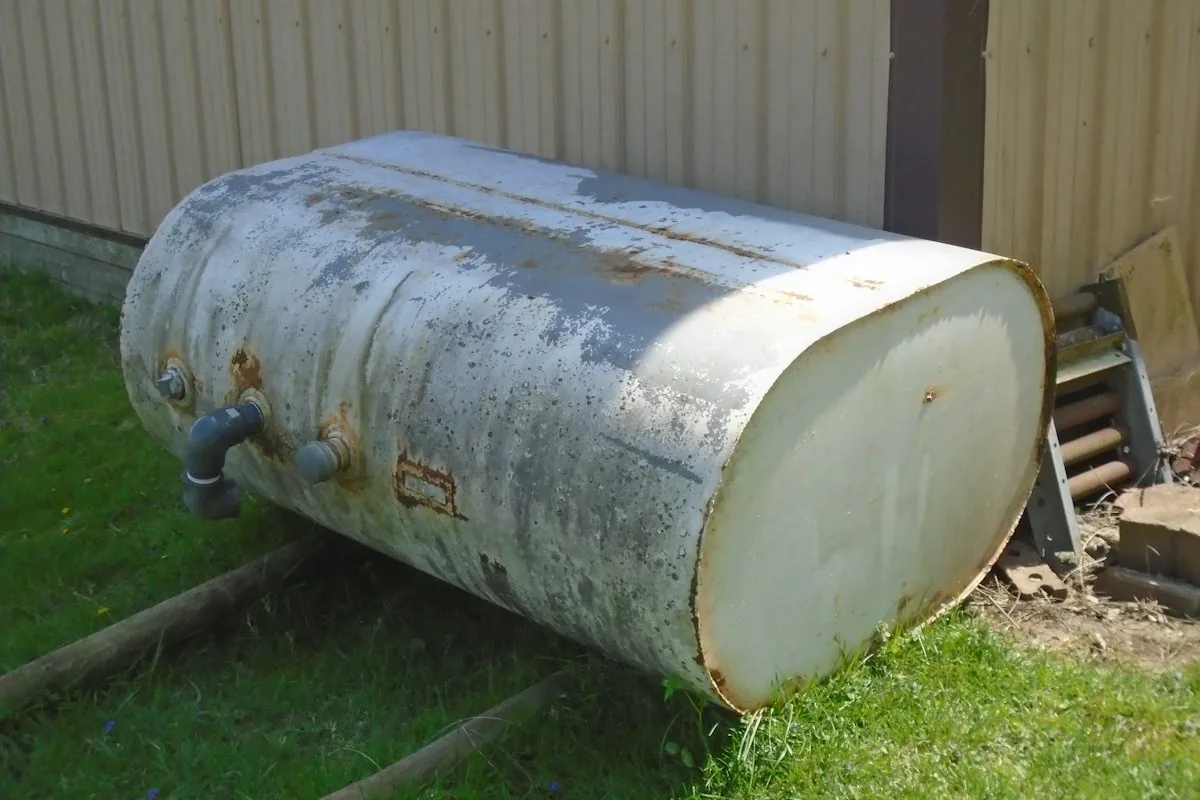
Corrosion on a Moncton tank usually starts at the bottom seam where condensed water collects, not on the visible top surface. A tank that looks sound from above can be paper thin where it matters.
Regulation 87-97 under the Clean Environment Act governs petroleum product storage and handling in this province, and it is what makes tank removal contractor work rather than homeowner work. The installation side is covered by CSA B139, the Installation Code for Oil-Burning Equipment, which is the standard a replacement tank has to satisfy.
Registered contractors only. A homeowner has no legal disposal route for the residual oil and sludge, and cutting an unpurged tank is a vapour hazard rather than a shortcut.
Petroleum hydrocarbon concentrations above roughly 200 mg/kg in residential soil trigger reporting to the Department of Environment and Local Government. The laboratory number decides, not an opinion on site.
Moncton does not normally require a building permit to remove an above-ground tank. A buried tank involves excavation, so a municipal permit may apply depending on depth and location.
Greater Moncton is the core of the service area: Moncton on the west bank of the Petitcodiac, Dieppe to the east, and Riverview across the river in Albert County. We also cover Shediac and the coastal communities to the northeast, Salisbury and Sackville, and travel west to Fredericton and southwest to Saint John for scheduled work.
Geography matters more here than in most markets. The glacial till and marine clay in the Petitcodiac valley drain slowly, which means a leak from a buried tank tends to stay near the tank rather than spreading, but also that the clay holds what it absorbs. That combination usually keeps an excavation contained and makes soil sampling worth doing on any pre-1990 buried tank.
The questions below are the ones Moncton homeowners actually ask, starting with cost. Every answer opens with the answer.
Oil tank removal in Moncton runs about $500 to $1,500 for an above-ground tank in a basement or beside the house, and $2,500 to $5,000 for a buried tank that comes out clean. Those are Canadian dollars and they include cutting, cleaning, pumping out the residual oil, transport and scrap disposal. If soil around a buried tank turns out to be contaminated, remediation pushes the total to $5,000 to $15,000 and occasionally beyond $25,000 on a bad one. The single biggest cost variable is not the tank, it is whether the ground under it is clean.
Hire a registered petroleum tank contractor, because in New Brunswick that is the only legal route. Under Regulation 87-97 of the Clean Environment Act, removing or decommissioning a fuel oil storage tank is regulated work: the residual oil and sludge are handled as waste, the tank is cut and cleaned before it leaves the property, and the job is documented. The practical sequence is a site visit, a written quote, a booked date, half a day of work for most tanks, then a decommissioning letter you keep for your insurer and for the eventual sale of the house.
The tank is drained, cleaned, cut open, verified empty and then hauled away as scrap steel, with the sludge going to a licensed waste facility. For an above-ground tank in a Moncton basement that means pumping the remaining oil, disconnecting the fuel line and vent, cutting the tank into pieces small enough to carry up the stairs, and wiping the interior down. For a buried tank it means excavating the cover soil, exposing the tank, pumping and cleaning it in place, lifting it out with an excavator, inspecting the shell for perforations, sampling the soil under it, and backfilling the void with clean sand or approved fill.
Plan on 15 to 20 years for a steel tank and 20 to 25 years for a double-wall or fibreglass tank in this climate. Atlantic Canada is harder on tanks than most of the country: long heating seasons keep the tank in service more months of the year, coastal humidity condenses water inside the tank overnight, and that water sits at the bottom and corrodes the shell from the inside out. A Moncton tank that looks fine on the outside can be thin at the bottom seam. Insurers in New Brunswick commonly stop renewing coverage on tanks past 20 years, which is why a lot of removals here are triggered by a letter rather than a leak.
No, not legally in New Brunswick. Regulation 87-97 under the Clean Environment Act puts petroleum storage tank removal in the hands of registered contractors, and the residual oil and sludge are regulated waste that a homeowner has no legal way to dispose of. Beyond the regulation there is a practical problem: a tank that has been cut without being purged is a vapour hazard, and a homeowner who disturbs contaminated soil and then backfills over it has created a disclosure problem that follows the property all the way to closing.
Usually not for an above-ground tank, and sometimes yes for a buried one. The City of Moncton does not typically require a building permit to take an above-ground basement or outdoor tank out of service. A buried tank is different because it involves excavation, and a municipal permit may apply once the dig goes beyond roughly 30 cm or affects a right of way. The provincial side is handled by the contractor: the work has to comply with Regulation 87-97, and any significant contamination found during the dig gets reported to the New Brunswick Department of Environment and Local Government.
Most jobs are done in a single visit. An above-ground tank in a basement or beside the house takes two to four hours from arrival to cleanup. A buried tank with no contamination takes four to eight hours including the excavation, the lift, soil sampling and backfill. If sampling shows contaminated soil, the job becomes a two to five day remediation with excavation, disposal of the affected material, confirmation sampling and reinstatement of the yard.
Tell us the tank type, roughly where it sits and the age of the house. We come back within one business day with a fixed figure in Canadian dollars and a clear note on what soil sampling would add.