Pump out first
Standing oil, accumulated water and bottom sludge are vacuumed out and taken to a licensed receiving facility with a transfer record. An empty-looking tank is not an empty tank, and this stage is what makes the rest of it safe.
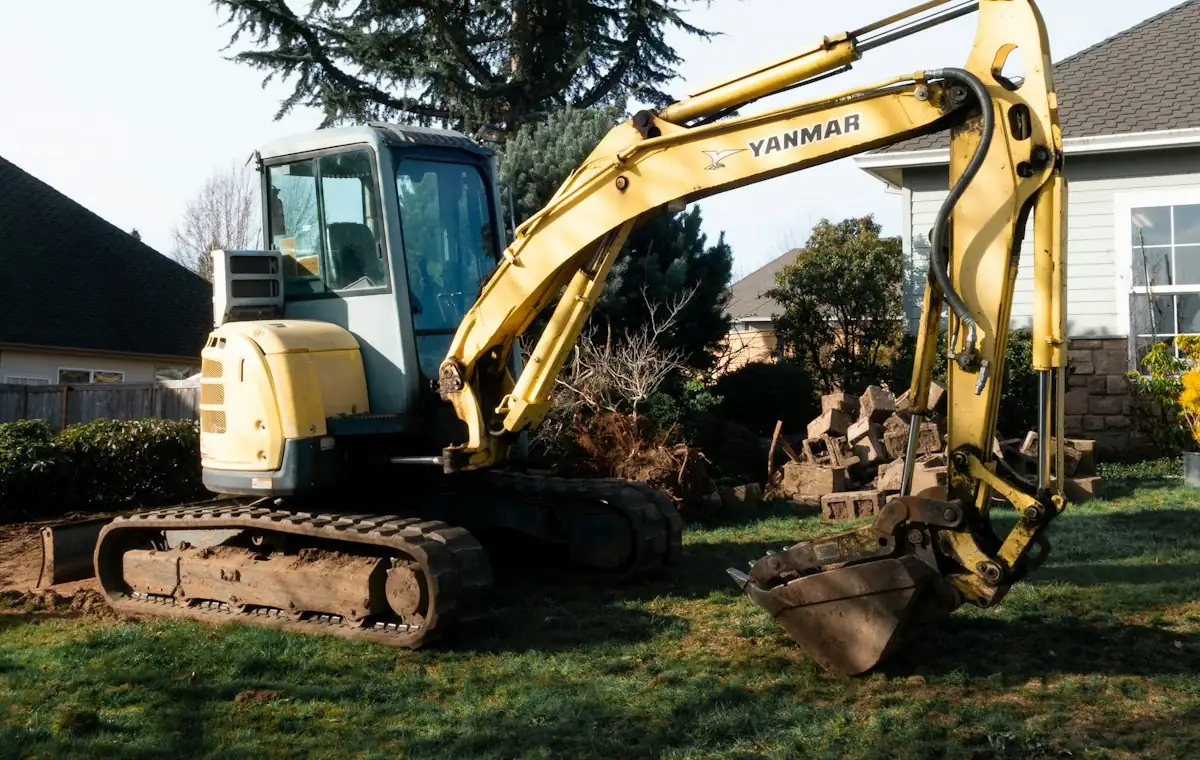
Roughly 150 kilometres southwest of Moncton, booked as scheduled work with travel shown as its own line. Old housing stock, bedrock, and a caseload weighted toward basement tanks rather than buried ones.
Most Saint John oil tank removals are above-ground jobs in the $500 to $1,500 band rather than excavations in the $2,500 to $5,000 band, because the city's older housing stock sits on bedrock and steep ground where burying a tank was rarely practical. On those lots the tank went into the basement, and a basement tank is the cheaper, faster, simpler half of the trade: two to four hours, no soil question, no permit, no yard to rebuild.
That is the single most useful thing to know before you start gathering quotes. A homeowner who has read about $5,000 buried tank jobs and assumes that is the number waiting for them is often looking at a $900 job instead. The way to tell is simple: if you can walk up to the tank and put a hand on it, you are in the cheap band. If the only evidence is a pipe in the ground outside, you are not.
Steel tanks are rated 15 to 20 years. Bay of Fundy humidity and fog work on them from the outside while internal condensation works from the inside, and much of the Saint John stock is well past double that rating. A tank with no legible date plate should be treated as expired.
The complication that comes with old housing is not cost, it is geometry. Narrow stairwells, low basement headroom, tight street frontage for a transport vehicle and restrictions on disturbing exterior fabric on heritage properties all shape how the tank gets out. The answer is usually cutting the tank into sections that fit the route, and that only happens after the interior has been cleaned to remove the vapour risk. Never in the other order.
Shallow bedrock both helps and hurts: it forced tanks to be installed shallower, which makes them easier to reach, but it limits how an excavation can be widened if contamination turns up. Chasing a petroleum plume sideways through fractured rock is a genuinely different problem from chasing it through the glacial till and marine clay that dominate Greater Moncton, because fractures give product a path that bulk soil properties do not predict.
That is why a Saint John buried tank gets assessed on site before a price is fixed, rather than quoted from a phone description. The assessment establishes tank position, depth, size, the machine access route and how much rock is in the way. On a tight urban lot with rock close to surface, the access question is frequently the binding constraint rather than the tank itself.
Where soil is clean, the sequence is the same everywhere in the province: locate, expose, pump out, clean, cut, lift, sample, backfill, document. The reportable petroleum hydrocarbon threshold of roughly 200 milligrams per kilogram applies province-wide. Detail on the whole underground sequence is on the underground tank removal page.
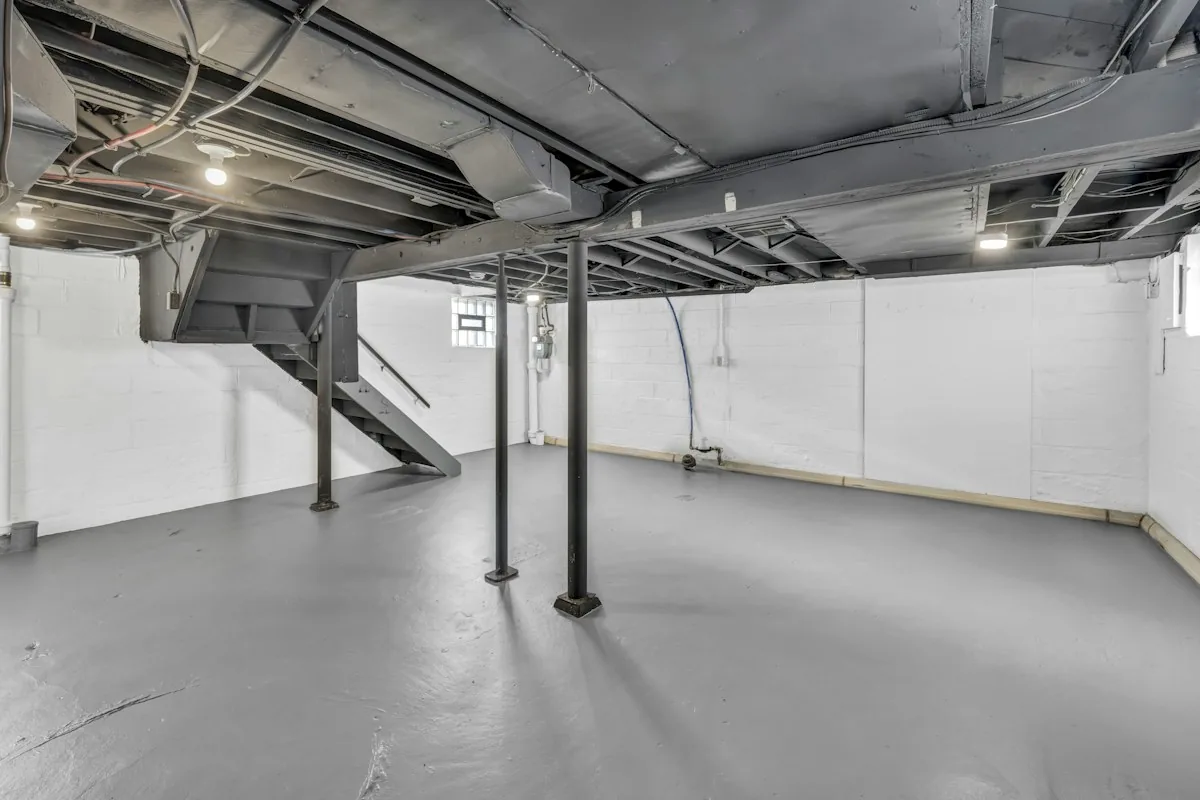
A typical older basement. Headroom, post spacing and stairwell width decide whether a tank walks out whole or comes out in sections.
A basement tank removal is a two to four hour visit built around one rule: nothing gets cut until the inside is clean. The vapour and the sludge layer in the bottom of an apparently empty tank are what make an informal removal dangerous, and every stage of the sequence exists to get past that safely before any tool touches steel.
Booking a Moncton crew for a Saint John job makes sense on buried tanks and combined removal plus replacement work, and it makes less sense on a straightforward basement tank where the travel line becomes a large share of a small invoice. That is the honest position. Travel is quoted as a visible separate item precisely so you can make that judgement rather than having it made for you inside a padded tank price.
When you compare against a local quote, compare line by line. The five items most often missing from a cheaper number are soil sampling, laboratory analysis, backfill material, surface reinstatement and the decommissioning letter itself. Two quotes that differ by more than about 30 percent on the same tank almost always differ in scope rather than margin, and the letter is the one line you genuinely cannot do without, since it is the entire reason to use a licensed contractor instead of a scrap yard.
Above-ground removal in Saint John runs $500 to $1,500 and buried removal runs $2,500 to $5,000 with clean soil, plus a travel line for the roughly 150 kilometre run southwest from Moncton. The tank work is priced the same because the process, disposal routes and provincial requirements are identical across New Brunswick. Travel is shown as its own quote item. In practice Saint John jobs skew more heavily toward basement tanks than buried ones, which is the cheaper half of the trade.
Saint John has one of the oldest housing stocks in the province, and much of it is built tight to the street on bedrock or steep ground where burying a tank was never practical. On those lots the tank went in the basement, which is why the Saint John caseload is weighted toward above-ground removals rather than excavations. That is good news for cost, since a basement tank is a two to four hour job with no soil question, no permit and no yard restoration.
Yes, shallow bedrock limits how a tank was installed in the first place and it constrains how an excavation can be widened if contamination is found. Where rock sits close to the surface, a buried tank tends to be shallower, which helps, but chasing a plume sideways through fractured rock is a different problem from chasing it through till. It is one reason a site assessment matters before a price is fixed on a Saint John buried tank, rather than quoting from a description over the phone.
Generally yes, because the housing stock is older and because Bay of Fundy humidity and fog are hard on steel from the outside while condensation works on it from the inside. Steel tanks are rated 15 to 20 years and many Saint John tanks are well past double that, particularly in houses where oil heat was never replaced. A tank with no legible date plate should be treated as expired regardless of how it looks, since internal corrosion is invisible until it weeps.
It makes sense on buried tanks and combined removal-and-replacement jobs, and less sense on a simple basement tank where the travel line becomes a large share of a small invoice. That is the honest position rather than a sales one. Ask for a written quote with travel shown separately, compare it against local quotes on the same line-by-line basis, and check that the cheaper option actually includes sampling, laboratory analysis, backfill and the decommissioning letter.
Yes, and older or heritage properties are routine work, but the constraints get established before anybody arrives rather than discovered on the day. Narrow stairwells, low basement headroom, tight street access for a transport vehicle and restrictions on disturbing exterior fabric are the usual issues. A basement tank in a tight space is cut into sections small enough to carry out, and that cutting only happens after the interior has been cleaned to remove the vapour risk.
Tell us whether the tank is in the basement or in the ground, how old the house is, and what the stairwell or street access looks like. You get a written figure in Canadian dollars with travel shown as its own line.