Moncton Oil Tank Removal
Moncton, NB · Tank Removal & Disposal
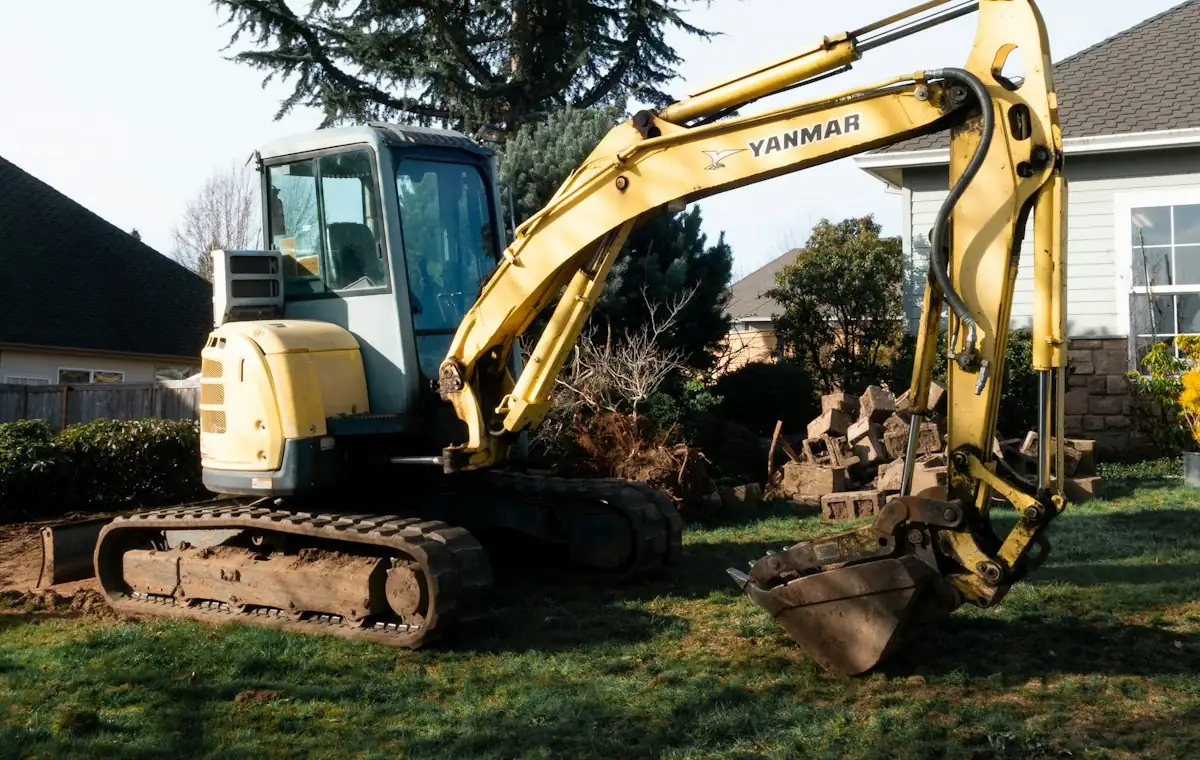
Residential yard excavation during a heating oil tank removal in New Brunswick
Pricing, 2026

Oil Tank Removal Cost in New Brunswick

Above-ground tanks $500 to $1,500. Buried tanks $2,500 to $5,000 with clean soil. Remediation $5,000 to $15,000 and up. Every figure in Canadian dollars, with the reason behind each range spelled out.

The short answer, in Canadian dollars

Above-ground oil tank removal in New Brunswick costs $500 to $1,500 and buried tank removal costs $2,500 to $5,000 with clean soil. Those two ranges cover the large majority of residential work in the province. Everything else on this page explains where inside those ranges a given job lands, and what pushes a job outside them into the remediation band at $5,000 to $15,000 or beyond.

Every figure here is all-in rather than a starting point. They include pumping the residual oil and sludge, capping the fuel lines at the appliance to CSA B139, cleaning the tank interior, cutting where the route out requires it, hauling the shell to a scrap processor, backfilling and compacting where there is a hole, the waste transfer records, and the decommissioning letter naming the tank, the date and the method. A quote that excludes any of those is not cheaper, it is smaller.

Nothing on this page is a quote. Tank pricing tracks access, depth, size and soil condition, and the only honest way to produce a number is to look at the site. What these ranges do is tell you which order of magnitude you are in before anybody arrives.

Every job type, what it includes, what moves it

The table below is the whole price list rather than a teaser, including replacement tanks and heat pump conversion, because the decision most homeowners actually face is not just removal, it is removal plus what comes next. The middle column is what the range buys. The right column is what decides where in the range you sit.

JobRange (CAD)What it includesWhat moves it
Above-ground tank removal$500 to $1,500Pump out, cap the fuel lines, clean the interior, cut if needed, haul away, disposal records, decommissioning letter.Stairwell width, headroom, tank size, whether the floor under the tank is stained.
Buried tank removal, clean soil$2,500 to $5,000Locate, excavate, pump out, clean, cut, lift, soil sampling and laboratory analysis, clean backfill, compaction, surface restoration, full paperwork.Machine access, depth, tank size, whether a hard surface sits over the tank, season.
Buried tank plus soil remediation$5,000 to $15,000+Everything above plus wider excavation, haulage of impacted soil to an approved facility, confirmation sampling rounds, provincial notification and file closure.Volume of impacted soil, haul distance, number of confirmation rounds, whether groundwater is involved.
Replacement tank, supplied and installed$2,500 to $4,500Double-wall or Roth style tank, pad or stand, new supply lines and fittings, commissioning and leak check.Tank type and capacity, indoor or outdoor siting, how much line has to be rerun.
Old tank out and new tank in, one visit$3,200 to $6,000Removal scope plus replacement scope on a single mobilisation, with one set of paperwork covering both.Whether the old tank was buried or above ground, plus everything in the two rows above.
Removal plus cold-climate heat pump$10,000 to $18,000Tank removal and decommissioning, heat pump supply and install, electrical work, commissioning. Before rebates.Home size, number of indoor heads, electrical panel capacity, backup heat strategy.

The five cost drivers, ranked

Access is the biggest single lever on a buried tank price, ahead of depth, tank size and season, and it is the one homeowners can partly control for free. The five drivers below explain nearly every difference between two honest quotes on comparable tanks, and they are listed in the order they actually matter rather than the order people expect.

1. Access to the tank

An open side yard with a gate a mini excavator fits through is the cheap version of a buried job. The same tank behind a narrow gate, under a deck, inside a hedge line or past a retaining wall costs more before a shovel moves, because the access has to be made and then put back. Clearing a route, moving a shed or taking a fence panel off yourself is free money on this line. Ask what would help.

2. Hard surface over the tank

Asphalt, concrete, interlock or a poured walkway over the tank means cutting, breaking out, disposing and then rebuilding. Reinstatement is usually the largest single add-on on a residential job and it varies far more by material than backfill does. Get it quoted as a separate visible line, because it is where two similar quotes most often diverge.

3. Soil condition

The only driver with an open top end. Clean samples keep the job in the $2,500 to $5,000 band. Readings above roughly 200 milligrams per kilogram of petroleum hydrocarbon move it into $5,000 to $15,000, and a plume that reaches groundwater or crosses a boundary can go past $25,000. This one is not knowable until the hole is open, which is why it is quoted as a basis rather than a number.

4. Depth and tank size

Every extra foot of depth is more spoil to handle and more clean backfill to buy and compact. Regraded yards and tanks that ended up beneath a later driveway are the usual reasons a tank sits deeper than the two to four foot norm. Size matters less than people expect, and the jump from 900 to 2,300 litres is real but modest against the access effect.

5. Season

Frozen ground in a New Brunswick January means a thaw step or a heavier machine, plus snow clearing, short daylight and a yard that cannot be properly restored until spring. Saturated spring ground brings a hole that wants to slump. May through October is the window that produces both the cleanest job and the best restoration, and if your trigger is an insurance renewal rather than a closing date you usually have the luxury of choosing.

Bonus: travel

Core Greater Moncton work, meaning Moncton, Dieppe and Riverview, carries no travel line. Shediac is on the scheduled coastal run. Fredericton at roughly 180 kilometres and Saint John at roughly 150 kilometres are quoted with travel shown as its own visible item, because at that distance you deserve to see the number rather than have it padded into the tank price.

How to compare two quotes without getting caught out

Ask both contractors to itemise five specific things and most of the price gap will explain itself: soil sampling, laboratory analysis, backfill material, surface reinstatement and the decommissioning letter. Those five are the standard omissions in a low number, and the last one is the item you genuinely cannot do without, because it is the entire reason to hire a licensed contractor instead of calling a scrap yard.

A gap wider than about 30 percent that survives that itemisation is usually an access assumption. One contractor has walked the route a machine would take and priced it, the other has quoted from a phone description and will revise on the day. The tell is whether the quote mentions the access route at all. On a buried tank, a quote issued without a site visit is an estimate wearing a quote's clothing.

The other thing worth asking is what happens if the samples come back high. A good answer is a stated basis, meaning a unit rate for soil haulage and an agreed process for confirmation rounds. A bad answer is silence, or a flat number that quietly assumes contamination and pads the base price for everybody. Both contractors are being honest in the first case and only one of them is in the second.

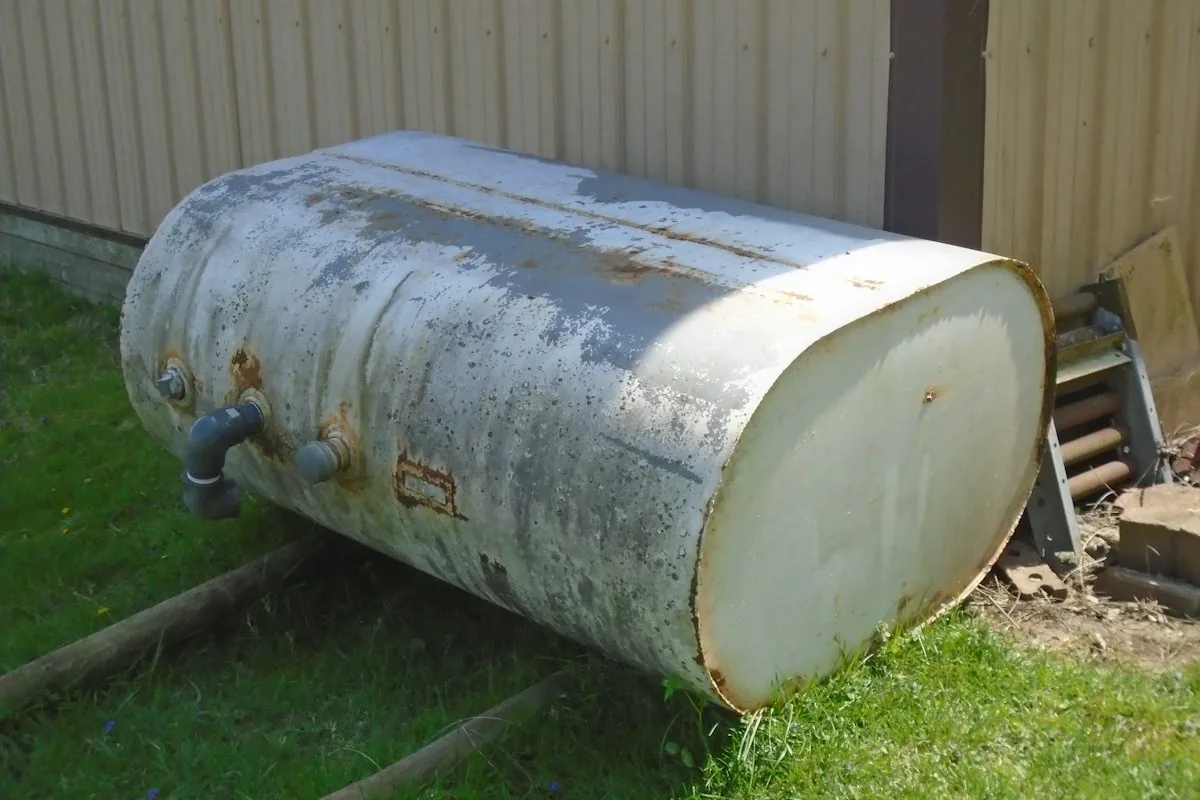
Removed residential heating oil tank staged for scrap disposal after a New Brunswick tank removal

Disposal is a cost line, not an afterthought. The shell goes to a scrap processor and the residual oil and sludge to a licensed receiving facility, each generating a transfer record.

Where the money goes on a buried tank job

Roughly speaking, on a clean $3,500 buried tank removal the labour and machine time is the largest single share, followed by disposal, then sampling and laboratory analysis, then backfill material and restoration, with permits and documentation the smallest slice. Nobody itemises to the dollar, but the shape is worth knowing because it explains which corners a cheap quote has to cut.

Labour and machine

A crew plus a mini excavator for most of a day, including mobilising the machine to site and back. This is the line that grows when access is difficult, because difficult access costs hours rather than materials.

Disposal and laboratory

Residual oil and sludge to a licensed receiving facility, tank shell to a scrap processor, soil samples to an accredited laboratory. All three generate records, and the records are the deliverable as much as the empty yard is.

Backfill and restoration

Clean sand or approved fill, compaction in lifts, topsoil and seed on a lawn. Where a hard surface has to be rebuilt this line jumps sharply, which is why it belongs on the quote as its own item.

Official sources

The regulatory and grant figures referenced above come from the sources below. Programme amounts and eligibility change, so read them directly rather than relying on any contractor summary, this one included.

  • New Brunswick Department of Environment and Local Government

    The provincial authority behind the rules that make sampling, reporting and documented decommissioning mandatory, which is why they appear as cost lines rather than optional extras.

  • Oil to Heat Pump Affordability Program (NRCan)

    The federal funding stream for oil-heated homes converting to a cold-climate heat pump. Registrations in New Brunswick closed on 30 June 2026 with a final application date of 31 July 2026, so treat any published amount as historic until you confirm it.

  • City of Moncton building permits

    Where the municipal permit line on a Moncton quote comes from. Dieppe, Riverview and other municipalities run their own equivalents.

Cost questions

These are the pricing questions that come up most often. The regulatory side is covered on the permits page and the full question set is on the FAQ page.

How much would it cost to remove an oil tank in New Brunswick?

Removing an above-ground oil tank in New Brunswick costs $500 to $1,500 and removing a buried tank costs $2,500 to $5,000 where the soil comes back clean. Those are 2026 Canadian dollar figures for residential tanks and they are all-in: pumping the residual oil, capping the fuel lines, cleaning the tank interior, hauling the shell away, backfilling where there is a hole, the disposal paperwork and the decommissioning letter. Soil remediation sits outside those ranges at $5,000 to $15,000 or more, because it is priced against what the laboratory finds rather than against the tank.

Why is buried tank removal four times the price of an above-ground tank?

Because the buried price includes an excavation, a soil sampling programme and a backfill that the above-ground job does not have. A basement tank sits on a concrete floor where anybody can see what is underneath it. A buried tank sits on ground nobody has inspected since the 1970s, and establishing the condition of that ground means a machine, a hole, laboratory analysis, clean fill material, compaction and surface restoration. Strip those five items out and the two jobs cost roughly the same.

What is the cheapest way to deal with an old oil tank?

The cheapest legitimate route is a straightforward above-ground removal at $500 to $1,500, and if you are also replacing the tank, doing both on one visit at $3,200 to $6,000 rather than booking two separate jobs. Beyond that, the levers you actually control are access and timing: clearing a machine route, taking a fence panel off, moving a shed, and booking outside the frozen months. What is not cheaper is skipping the paperwork, because a tank removed without a decommissioning letter costs you at the next sale or insurance renewal.

Does the price include soil testing?

On a reputable buried tank quote, yes, and sampling plus laboratory analysis should appear as a named line item rather than an assumption. This is the single most common omission in a cheap quote. Samples have to be taken from the open excavation, which means the cost cannot be added later without digging the yard a second time. If a quote for a buried tank does not mention sampling or laboratory analysis anywhere, that is not a cheaper contractor, it is a smaller scope.

How much does a replacement oil tank cost in New Brunswick?

A replacement tank supplied and installed runs $2,500 to $4,500 in New Brunswick, covering a double-wall or Roth style tank, new lines and fittings, and commissioning. Doing the old tank out and the new tank in on one visit runs $3,200 to $6,000, which is less than the two prices added together because a single mobilisation replaces two. Modern tanks carry a 20 to 25 year service life and sit above ground where they can actually be inspected, which is why nobody buries a residential tank any more.

Is oil to heat pump conversion cheaper than a new tank?

No, conversion costs more up front at $10,000 to $18,000 before rebates against $2,500 to $4,500 for a replacement tank, and the rebate that narrows the gap is now up to $2,000 on a qualifying heat pump through New Brunswick's Total Home Energy Savings Program rather than the $15,000 combined funding that closed to new provincial registrations on 30 June 2026. The decision is really about whether you want to keep buying fuel for the next two decades. New Brunswick oil-heat penetration has fallen from roughly 55 percent of households in 2005 to about 35 percent today, and most of those conversions happened at the moment a tank came due anyway.

Why do two quotes on the same tank differ so much?

Quotes that differ by more than about 30 percent on the same tank almost always differ in scope rather than in margin. The five items most often left out of the cheaper number are soil sampling, laboratory analysis, backfill material, surface reinstatement and the decommissioning letter itself. Ask each contractor to list those five explicitly and the spread usually collapses. Where it does not collapse, the remaining difference is normally access assumptions, meaning one contractor has looked at how a machine reaches the tank and the other has not.

Are there rebates or grants for oil tank removal itself?

No, there is no New Brunswick or federal grant for oil tank removal on its own, and there never has been. What is subsidised is the alternative to a new tank: up to $2,000 toward a qualifying heat pump through New Brunswick's Total Home Energy Savings Program, which is frequently booked alongside a removal. The much larger oil-to-heat-pump funding, worth up to $15,000 combined federally and provincially, stopped accepting new New Brunswick registrations on 30 June 2026, so any source still quoting that as available is out of date. Read the programme page directly rather than relying on a contractor summary, because these amounts and eligibility rules have changed repeatedly.

What does a contaminated soil job actually cost?

Soil remediation on a residential New Brunswick tank runs $5,000 to $15,000 in the ordinary case and can exceed $25,000 where the plume has reached groundwater, run under a foundation or crossed a property line. The variable is volume: how much soil has to come out, how far it has to travel to an approved receiving facility, and how many confirmation sampling rounds it takes before readings come back below the provincial guideline of roughly 200 milligrams per kilogram. Most Greater Moncton tanks do not reach the upper band.

Should I get the tank removed before or after I list the house?

Before, almost always, because the same work done under a closing deadline costs more and earns less price credit than the same work done on your own schedule. A $3,500 line item you controlled beats a $3,500 holdback plus a buyer's anxiety discount, and the decommissioning letter becomes something the listing can state rather than something the offer has to condition on. Sellers who wait until a conditional period also lose the ability to shop the job, which is where most of the saving lives.
Get a real number for your tank

Ranges are useful for orientation and useless for budgeting. Send the tank type, the age of the house and how a machine would reach the yard, and you get a written figure in Canadian dollars with sampling, disposal and the decommissioning letter itemised.

What You Get Back
  • A written quote in Canadian dollars covering removal, cutting, cleaning, transport and disposal, with no day-of surprises.
  • A decommissioning letter naming the tank, the date and the method, which is what insurers and lenders ask for.
  • Waste transfer paperwork for the residual oil and the scrap steel, plus soil sample results if sampling was part of the job.
Get EstimateFree written quote, one business daySee Prices