Moncton Oil Tank Removal
Moncton, NB · Tank Removal & Disposal
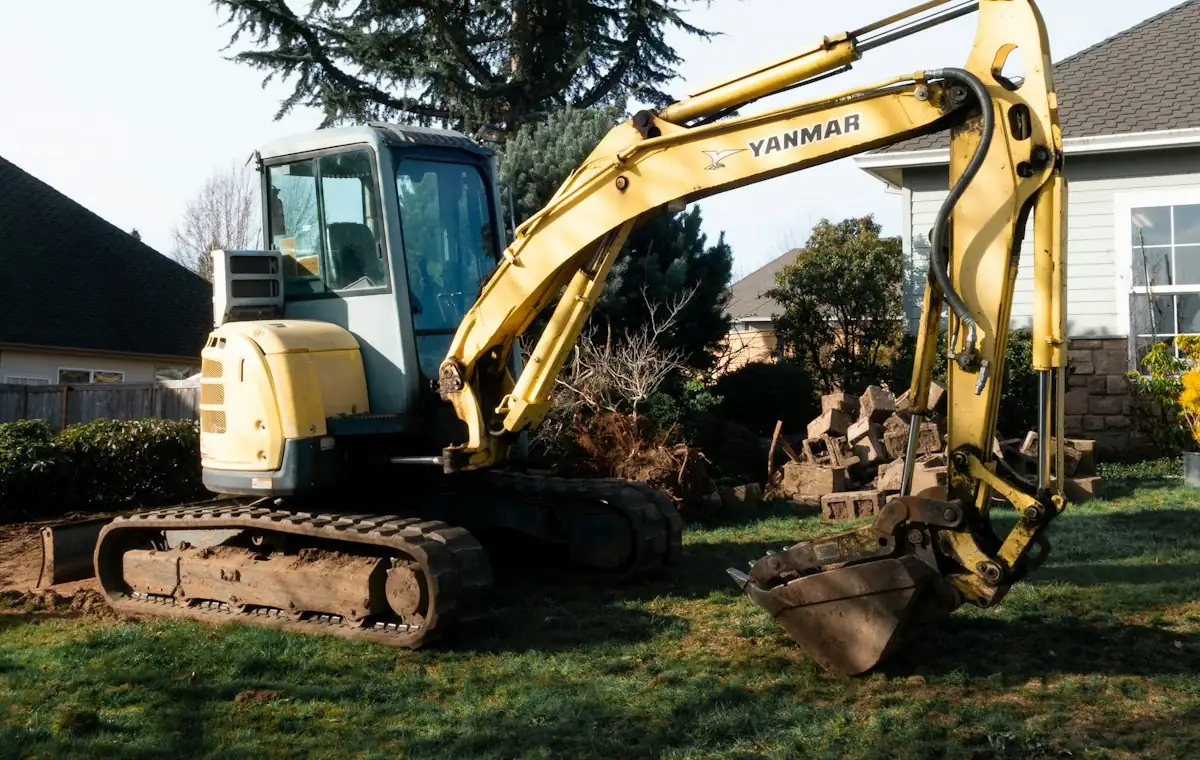
Excavator bucket exposing the crown of a buried steel heating oil tank in a residential New Brunswick yard
Buried tanks

Underground Oil Tank Removal in Moncton NB

Buried tank removal runs $2,500 to $5,000 when the soil comes back clean. Locating, excavation, interior cleaning, sampling, backfill and the decommissioning letter, handled as one job across Greater Moncton.

Underground tanks are the expensive half of the trade, and the reason is soil

A buried tank costs four to five times what an above-ground tank costs to remove because the price carries an excavation, a soil question and a backfill that a basement tank never has. Everything else about the two jobs is similar: pump it out, clean it, cut it, haul it, document it. The difference is that a basement tank sits on a concrete floor where you can see exactly what is underneath it, and a buried tank sits on ground nobody has looked at since the 1970s.

That is the whole underground specialty in one sentence. The tank itself is a straightforward object. The unknown is whether the bottom seam has been weeping into glacial till for fifteen years, and the only way to answer that is to open the hole and sample it. Which is why a fixed price quoted over the phone on a buried tank is either padded to cover the worst case or going to be revised on the day. Honest underground quotes come in two parts: a firm number for the removal, and a stated basis for what happens if the samples come back high.

Buried tank removal in Greater Moncton: $2,500 to $5,000 with clean soil, $5,000 to $15,000 where remediation is needed. Deep or widespread contamination can exceed $25,000, though very few residential tanks here reach that.

Greater Moncton is a buried-tank market for a specific reason. The housing stock that grew through the mid 1950s to the late 1980s was built when burying a single-wall steel tank in the yard was ordinary, unremarkable practice, and it was built in volume. Those tanks were rated for a service life of 15 to 20 years. The newest of them is now past 35. New Brunswick oil-heat penetration has dropped from roughly 55 percent of households in 2005 to about 35 percent today, but a furnace conversion does not remove a tank from a yard, it just stops anybody thinking about it.

Finding the tank before you dig for it

Locating comes before quoting, always, because the position, depth and size of the tank set most of the price. A tank is traced from what it left above ground: the fill pipe where the delivery truck connected, the vent pipe that let it breathe, and the pair of supply and return lines that ran back to the furnace. Where all three are visible the job is easy. Where the previous owner cut everything off at grade and seeded over it, the yard gets swept and probed instead.

Above-ground signatures

A capped steel pipe standing proud of a lawn or foundation, a thinner vent pipe about a metre high, a steel disc or plate set flush into a walkway, an unexplained concrete pad. Any of these near a house wall is usually the tank, not a well or a septic feature.

Signatures inside the house

Two abandoned copper lines entering the basement wall at knee height, an old fuel filter bracket still screwed to a joist, a burner-era chimney liner, or a dead circuit labelled for an oil burner. These survive furnace replacements and are the strongest evidence a tank once existed.

Signatures in the ground

A rectangular area of lawn that browns off earlier in a dry August, ground that settles slightly along one edge, or a patch that stays greener in the same conditions. Both directions are real signals: a tank changes drainage above it either way.

When nothing is visible

The yard is swept and probed on a grid, working outward from the likely delivery route between the street and the old furnace location. Older Moncton properties sometimes carry a second tank that was buried when the first one was left in place, so a positive find is not automatically the end of the search.

The seven stages of an underground removal

A clean buried tank removal runs through seven stages inside one working day, four to eight hours on site. The order is fixed for safety and evidentiary reasons: the tank is emptied before it is cut, it is cleaned before it is lifted, and the soil is sampled before the hole is closed. That last one is the stage most worth watching, because it is the only step in the sequence that cannot be redone later without excavating the yard a second time.

01

Locate and confirm the tank

The fill pipe, vent pipe and old supply lines are traced, the footprint is probed or swept, and the tank position, size and depth are confirmed before any price is fixed.

02

Clear utilities and plan the access route

Buried gas, water, sewer and electrical services are located and marked, and the machine track path is chosen to cross the least valuable ground.

03

Strip topsoil and expose the tank crown

Topsoil is stripped and stockpiled separately, then a mini excavator opens the hole down to the top of the tank so the fittings can be reached.

04

Pump out oil, water and sludge

Standing product, accumulated water and bottom sludge are vacuumed out and hauled to a licensed receiving facility with a waste transfer record.

05

Cut, clean and lift out

An access port is cut, the interior is squeegeed and wiped to remove residue and vapour risk, then the shell is lifted whole or cut into sections for removal.

06

Sample the open excavation

Soil samples are taken from the floor beneath the tank and from the side walls while the hole is open, then sent for petroleum hydrocarbon analysis.

07

Backfill, restore and document

The void is backfilled with clean sand or approved fill and compacted in lifts, the surface is restored, and the decommissioning letter and laboratory results are issued.

Soil sampling, and what Moncton ground does to a leak

Samples are taken from the floor of the excavation directly beneath the tank and from the side walls, because petroleum migrates with water rather than straight down. Petroleum hydrocarbon above roughly 200 milligrams per kilogram is reportable in New Brunswick, which triggers notification to the Department of Environment and Local Government and converts the job from a removal into a small remediation.

The soil profile around the Petitcodiac valley works in a homeowner's favour here. Greater Moncton ground is largely glacial till with marine clay lenses, which is dense and slow-draining compared with the free-draining sand you find in some other markets. A leak into clay-rich till tends to stay concentrated near the source rather than spreading laterally, which means the dig needed to chase it is smaller. It is the one genuinely good piece of news about local geology.

Where readings do come back high, the excavation widens along the affected direction, impacted soil goes to an approved receiving facility, and confirmation samples are taken from the new walls and floor. The file stays open until those read below the guideline. That is why remediation jobs run two to five days rather than one, and why they are priced against what is found rather than quoted up front.

Gloved hand sifting dark excavated soil over a sampling tray during an oil tank removal

Soil from the base of an open excavation being prepared for petroleum hydrocarbon analysis. This happens while the hole is open, never after backfill.

What drives the price up on a buried tank

Access is the single biggest lever on an underground job, ahead of depth, tank size and even season. A mini excavator needs a route to the tank, and if that route does not exist it has to be created and then put back. The four cost drivers below explain almost every difference between two quotes on similar tanks, and the first two are partly inside a homeowner's control.

Access to the tank

An open side yard with a gate wide enough for a mini excavator is the cheap version. A tank behind a fence with a narrow gate, inside a hedge line, under a deck, or beyond a retaining wall costs more before any digging happens, because the access has to be made and then restored.

Taking a fence panel off, moving a shed or clearing a bed yourself in the week before the crew arrives is free money on this line item. Ask what would help when the quote is done, not after.

Hard surfaces over the tank

A tank under asphalt, concrete, interlock or a poured walkway means cutting, breaking out, disposing of the material and then rebuilding the surface. That reinstatement is usually the largest single add-on on a residential underground job and it varies widely by material.

Get it quoted as a separate line rather than folded into the tank price, because it is the line where two otherwise similar quotes most often differ.

Depth and spoil volume

Every extra foot of depth is more soil to excavate, stockpile and handle, and more clean backfill to buy and compact. Regraded yards and tanks that ended up under a later driveway build are the usual reasons a tank sits deeper than the two to four foot norm.

Depth gets confirmed during the locate, which is why the locate happens before the quote is fixed rather than on the morning of the dig.

Season and ground condition

Frozen ground in a Moncton January means either a thaw step or a heavier machine, plus snow clearing, shorter daylight and a yard that cannot be properly restored until spring. Saturated spring ground brings its own problem, which is a hole that wants to slump.

May through October is the window that produces the cleanest job and the best restoration. If your trigger is an insurance renewal rather than a closing date, booking into that window is worth real money.

Full pricing across every job type, including replacement tanks and combined swaps, is on the New Brunswick cost page. The permit and notification side is covered on the permits page.

Why this is not a homeowner job

Self-performed tank work is unlawful in New Brunswick under Regulation 87-97, and on a buried tank the practical objections are worse than on a basement one. An apparently empty tank holds vapour and a sludge layer, and taking a cutting tool to it is how people are seriously injured. An open excavation next to a foundation is a collapse risk that needs to be managed. The residual oil and sludge are regulated waste with a disposal route and a transfer record attached.

And the commercial point of the exercise cannot be self-issued. The decommissioning letter naming the tank, the date and the method is what an insurer accepts and what a lender wants before a closing. A homeowner who digs up a tank, scraps the steel and fills the hole has spent a weekend producing nothing a lawyer will look at, and has destroyed the one opportunity to sample the soil underneath. That is a worse position than leaving the tank alone.

If it has already happened

Tanks do get removed informally, and it is a common situation rather than an embarrassing one. Say so up front when you ask for a quote. There are assessment routes that can produce a defensible record after the fact, usually involving targeted sampling at the former tank location, and they work considerably better when nobody is guessing about where the tank was or what came out of it.

Official sources

The provincial and municipal rules referenced on this page come from the sources below. Regulation text and permit thresholds change, so these are worth reading directly rather than taking from a contractor summary, including this one.

Underground tank questions

The questions below come up on almost every buried tank job in Greater Moncton. Broader questions about cost, permits and replacement options are answered on the FAQ page.

How do I know if there is a buried oil tank on my property?

Look for a capped or cut-off fill pipe near the foundation, a narrow vent pipe standing about a metre off the ground, a steel disc or plate set into a walkway or driveway, or a rectangular patch of lawn that browns off earlier than the grass around it. Inside the house, a pair of abandoned copper lines coming through the basement wall at knee height is the strongest single indicator, even if the furnace was swapped out decades ago. Property age helps too: Greater Moncton homes built between the mid 1950s and the late 1980s are the buried-tank era. If the signs are ambiguous, a contractor can sweep the yard rather than guess.

How deep are buried oil tanks in Moncton?

Most residential buried tanks in Greater Moncton sit with their crown two to four feet below grade, which puts the bottom of the tank roughly four to seven feet down. That depth was chosen historically to stay below frost and below the reach of a garden spade rather than to any code standard, so it varies house to house. Deeper installations exist where the yard was later regraded or a driveway was built over the tank, and those add cost because there is more spoil to move and more backfill to buy. Depth is confirmed during the locate, before the quote is finalised.

What size are residential underground tanks?

Residential buried tanks in New Brunswick are usually 900 to 2,300 litres, with 1,150 litres the most common single-family size. Larger 4,500 litre tanks appear on older duplexes, small apartment buildings and rural properties that were filled less often. Size affects the removal price less than people expect, because the excavation footprint and the access route drive most of the labour. A 2,300 litre tank in an open side yard is a cheaper job than a 900 litre tank behind a fence with a narrow gate.

Can a buried oil tank be removed in winter in Moncton?

Yes, buried tanks are removed through Moncton winters, but frozen ground adds hours and cost, so it is the season to avoid when you have a choice. Frost regularly reaches well past a foot by January in Westmorland County, and breaking through it needs either a thaw step or a heavier machine. Snow clearing, shorter daylight and difficult yard restoration all add up. The jobs that do run in winter are usually the ones driven by a closing date or a discovered leak, where waiting for spring is not an option.

What does the crew do with the hole after the tank is out?

The void is backfilled with clean sand or approved fill and compacted in lifts, then the surface is restored to roughly what was there before. Sand is preferred immediately around and beneath where the tank sat because it compacts predictably and it is clean by definition, which keeps a future soil question clear. Topsoil and seed go back on a lawn area. Where the tank was under a driveway or a walkway, restoring the hard surface is a separate line item and is quoted explicitly rather than assumed, because paving and interlock costs vary a lot more than backfill does.

Will removing an underground tank damage my yard?

An excavation the size of a buried tank means a disturbed area of roughly three by four metres plus a machine track path to it, so yes, the yard takes visible damage that grows back over a season. Good crews plan the track path to run over the least valuable ground, lay protective mats where they can, and strip and stockpile topsoil separately so it goes back on top rather than getting mixed into the spoil. Mature trees and established beds close to the tank are the real constraint, and if something cannot be worked around it gets discussed before the machine arrives rather than afterwards.

Is in-ground abandonment ever the right answer?

Filling a tank in place is only appropriate where full removal is physically impossible, most often a tank sitting under a load-bearing footing or beneath a structure that cannot be disturbed. The tank is emptied, cleaned, cut open, filled with sand or approved inert fill and documented. It is a weaker outcome than removal because the soil beneath the tank is never sampled, which leaves an unanswered question that a future buyer's lawyer can reopen. If a contractor proposes abandonment on a tank in an accessible yard, ask why, in writing.

Get a buried tank assessed and quoted

Tell us what you can see above ground, roughly when the house was built, and how a machine would reach the spot. We confirm the tank position and depth before fixing a number, so the figure you get is the figure you pay when the soil is clean.

What You Get Back
  • A written quote in Canadian dollars covering removal, cutting, cleaning, transport and disposal, with no day-of surprises.
  • A decommissioning letter naming the tank, the date and the method, which is what insurers and lenders ask for.
  • Waste transfer paperwork for the residual oil and the scrap steel, plus soil sample results if sampling was part of the job.
Get EstimateFree written quote, one business daySee Prices