Moncton Oil Tank Removal
Moncton, NB ยท Tank Removal & Disposal
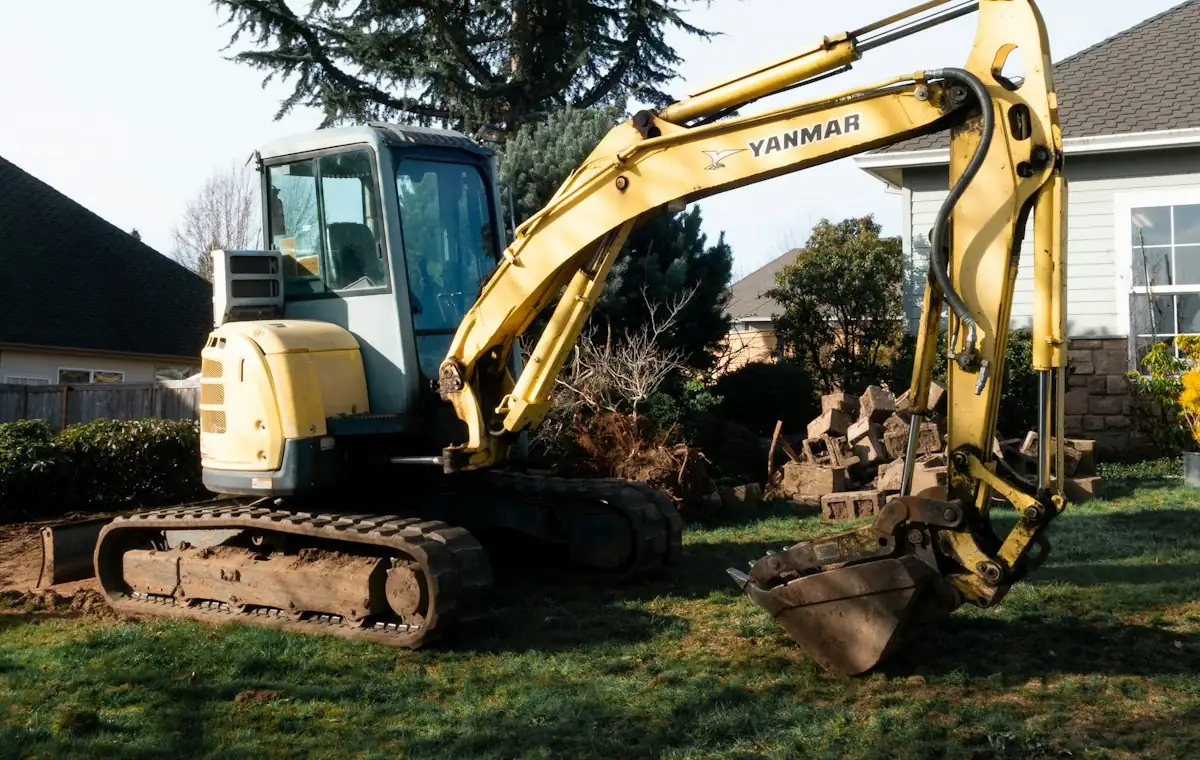
Mini excavator exposing a buried heating oil tank in the side yard of a Moncton, New Brunswick home
Moncton, New Brunswick

Oil Tank Removal in Moncton NB

Above-ground tanks from $500, buried tanks from $2,500, and a decommissioning letter with every job. Licensed petroleum tank contractors covering Moncton, Dieppe, Riverview and the wider Westmorland and Albert County area.

What oil tank removal in Moncton actually involves

Oil tank removal in Moncton means emptying the tank, disconnecting it from the heating system, taking it off the property, closing the hole or the space it occupied and handing you paperwork that proves all of it happened. That last part is the reason people call rather than phoning a scrap yard. The physical work on an average residential tank is a half day. The document set behind it, the decommissioning letter, the waste transfer records and the soil results where sampling applies, is what satisfies an insurer, a mortgage lender, a buyer's lawyer and the provincial regulator. A tank cut up and hauled off without that trail leaves the same open question on the property it had before the tank was gone.

Greater Moncton has a large stock of homes built between the mid 1950s and the late 1980s, which is precisely the window when burying a steel heating oil tank in the yard was ordinary practice. Those tanks were single-wall, unlined and rated for a service life shorter than the time most of them have now been in the ground. New Brunswick has moved away from oil heat since, penetration has dropped from roughly 55 percent of households in 2005 to about 35 percent today, but the tanks did not leave with the furnaces. A house converted to electric baseboard in 1998 can still have a full steel tank sitting three feet under the lawn, forgotten, with the fill pipe cut off at grade.

The trade covers both ends of the problem. Above-ground tanks in basements, in crawl spaces and on outdoor concrete pads are the straightforward half, usually two to four hours, sometimes longer where the tank has to be cut down to a size that fits a stairwell. Buried tanks are the half with variables in it, because the condition of the soil underneath is unknown until the hole is open. Both paths end in the same place: a clean site, a capped fuel system and a letter with the tank, the date and the method written on it.

Removing or decommissioning a fuel storage tank yourself is not legal in New Brunswick. Regulation 87-97 under the Clean Environment Act puts the work in the hands of registered contractors, and a self-performed removal produces no document your insurer will accept.

Nothing on this page is a quote. Tank removal prices track access, depth, tank size and soil condition, and the only honest way to produce a number is to look at the site. What the ranges here do is tell you which order of magnitude you are in before anyone shows up, so a $4,000 buried-tank estimate reads as normal rather than alarming, and a $12,000 estimate prompts the right follow-up question about what was found in the soil.

Get a Free Quote

Tell us what kind of tank you have. We reply within one business day with a written price in Canadian dollars.

Buried tanks and above-ground tanks are two different jobs

A buried tank costs roughly four to five times what an above-ground tank costs to remove, because the price includes an excavation, a soil question and a backfill that the above-ground job does not have. Understanding which one you have is the first thing to settle, and it is not always obvious from inside the house. A capped pipe sticking out of the lawn, a pair of pipes near the foundation, a rusted disc in the driveway, an unexplained patch of grass that dies back in August: those are buried tank signatures. A tank you can walk up to and put a hand on is the other kind.

Above-ground tanks

These sit in a basement, a crawl space, an attached garage or on a pad outside, usually a 900 litre vertical or a horizontal oval on steel legs. Removal is two to four hours. The oil is pumped, the lines are cut and capped at the furnace, the tank interior is cleaned, and the shell either walks out a door or gets cut into sections that fit the stairwell.

The two things that add time are stairwell geometry and interior condition. A tank that has been sitting half full for a decade has a sludge layer in the bottom that has to come out before any cutting tool touches the steel, and that cleaning step is not optional. A basement floor with an oil stain under the tank legs also changes the conversation, because a weeping tank has been weeping somewhere.

Typical Moncton range: $500 to $1,500, all in, with paperwork.

Buried and underground tanks

These are steel tanks, typically 900 to 2,300 litres, set two to five feet down in the yard, under a walkway or occasionally under a driveway or deck. The crew locates the tank from the fill and vent pipes, exposes the top with a mini excavator, pumps it out, cuts an access port, cleans the interior and lifts it, then samples the walls and floor of the open hole.

Everything hinges on those samples. Clean soil means the hole is backfilled with sand or approved fill, compacted, the surface is restored and the job closes the same day. Readings above the reportable level mean the excavation widens and the file goes to the province. This is the split that turns a $3,500 job into a $9,000 one, and it is why a fixed price quoted sight unseen on a buried tank should be read with suspicion.

Typical Moncton range: $2,500 to $5,000 clean, $5,000 to $15,000 with remediation.

When a Moncton homeowner actually needs the tank out

Most removals are triggered by one of six events rather than by a leak: a house sale, an insurance renewal, a heating system replacement, a visible failure, a tank past its service life, or a discovery during unrelated work. Very few people remove a working tank for its own sake. Knowing which trigger you are dealing with matters, because it sets the deadline and it determines which document at the end of the job is the one you actually need.

You are selling the house

The most common trigger in Greater Moncton. Buyers' lawyers ask about buried tanks, lenders want a compliance record before closing, and a tank of unknown age will sit as a condition on the agreement until it is dealt with. Removing it and holding the decommissioning letter is faster and cheaper than negotiating a holdback.

Your insurer asked

Carriers have tightened sharply on buried tanks. A renewal review or a switch of carrier commonly surfaces the question, and the answer they want is a written decommissioning record, not a reassurance that the tank seems fine.

You are replacing the heating system

Going to a heat pump, natural gas or electric leaves the tank orphaned. An empty, abandoned tank is still a liability on the property, and it is cheapest to take out while the mechanical work is already open and the equipment is already booked.

The tank is failing

Weeping seams, a wet or stained pad, a fuel smell in the basement, a filter that clogs constantly or a gauge that will not read. Internal corrosion on steel tanks runs from the inside out, so external appearance is a poor guide and a tank can go from fine to leaking in a season.

The tank is simply old

Steel lasts 15 to 20 years, fibreglass and double-wall 20 to 25. A buried steel tank installed in the 1970s or 1980s is not a maintenance item, it is an overdue removal, and the Moncton freeze-thaw cycle does not extend those numbers.

Something turned up mid-project

A landscaping dig, a foundation repair, a new driveway or a service trench hits steel nobody knew was there. Work stops until the tank is dealt with properly, which is why these jobs get booked with the most urgency.

How the removal runs, stage by stage

A residential oil tank removal runs through eight stages, and on a clean buried tank all eight happen inside one working day. The sequence is not negotiable, because several stages exist purely to make the next one safe: the tank is emptied before it is cut, it is cleaned before it is lifted, and the soil is sampled before the hole is closed. Contractors who compress the sequence are usually skipping the sampling, which is the one step that cannot be repeated later without digging the yard up twice.

01

Site assessment and quote

The tank is located and identified, access for equipment is checked, and a written quote in Canadian dollars is issued covering removal, disposal and documentation.

02

Permits and notification

Any municipal excavation or building permit is pulled and the provincial notification obligations under Regulation 87-97 are handled before work begins.

03

Utility locates

Buried services are located and marked so the excavator does not strike a gas line, water service, sewer lateral or buried electrical feed.

04

Pump out residual oil and sludge

Standing oil, water and bottom sludge are vacuumed out of the tank and transported to a licensed receiving facility with a waste transfer record.

05

Disconnect and cap the fuel system

The supply line, return line, fill pipe and vent are disconnected and capped at the appliance end in line with CSA B139 so the heating system is left safe.

06

Expose, clean and lift the tank

The tank is exposed or accessed, cut open, the interior is cleaned to remove vapour risk, then it is lifted out whole or cut into sections for removal.

07

Soil sampling and backfill

Samples are taken from the excavation walls and floor while the hole is open, then the void is backfilled with clean sand or approved fill and compacted.

08

Documentation and decommissioning letter

You receive a decommissioning letter naming the tank, the date and the method, plus waste transfer paperwork and any laboratory results.

Where the day usually goes long

Delays come from three places: the tank is not where the pipes said it was, the excavator cannot reach it, or the soil is not clean. The first is common on properties where the original fill pipe was moved or where a second tank was installed and the first left in place. The second decides itself in the first ten minutes on site, and a tank under a deck, inside a fenced yard with a narrow gate, or beneath an interlock patio needs the access problem solved before the tank problem. The third is the only one that turns a one-day job into a multi-day one.

Winter changes the arithmetic in Moncton. Frost can reach well below a foot by January, and frozen ground over a tank means either a thaw step or a heavier machine, both of which cost time. Work does happen year round here, but a homeowner with a choice and no deadline gets a cleaner job and a better yard restoration between May and October.

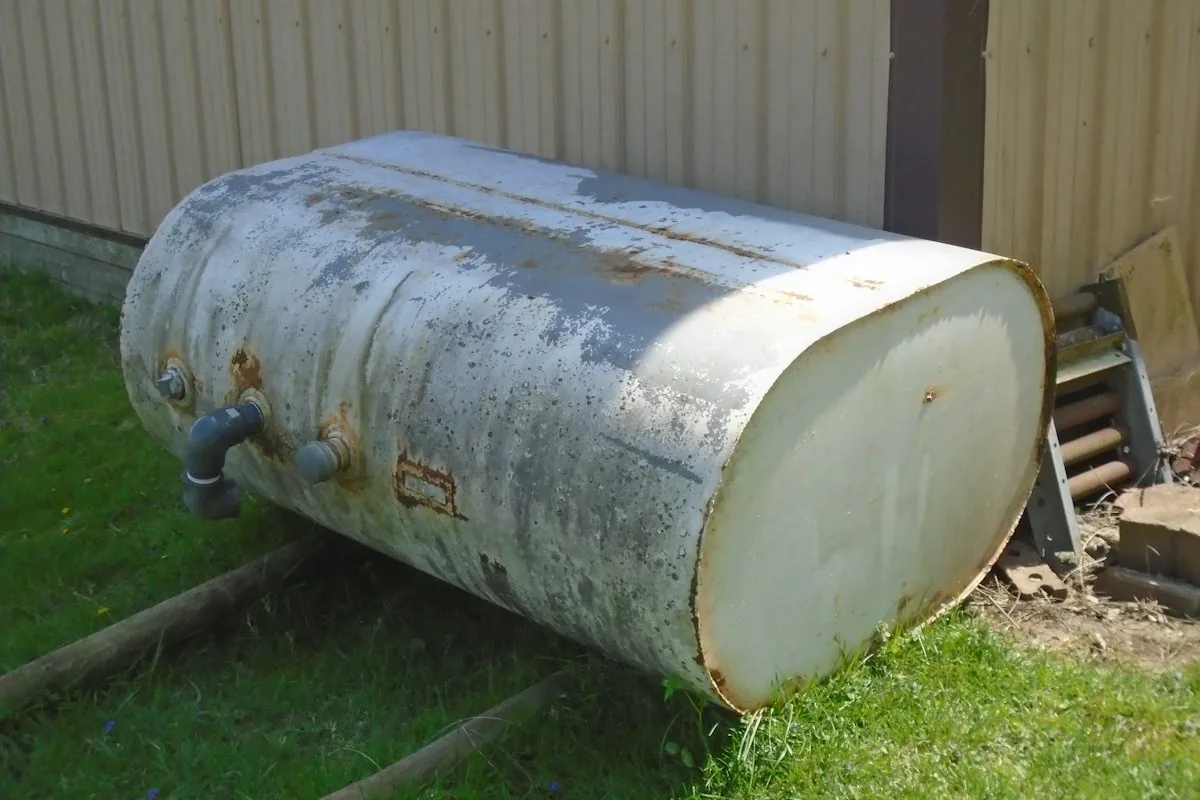
Rusted residential heating oil tank on wooden skids with the old fuel line fittings still attached, staged for disposal

A pulled residential tank staged for transport. The shell goes to a scrap processor and the residual oil and sludge go to a licensed receiving facility, each with its own transfer record.

What oil tank removal costs in Moncton, in Canadian dollars

Above-ground removal runs $500 to $1,500 and buried removal runs $2,500 to $5,000 with clean soil, which covers the large majority of residential work in Greater Moncton. Those figures are complete rather than a starting point: they include pumping the residual oil, cutting and capping the fuel lines, cleaning the tank interior, hauling the shell, backfilling, the disposal paperwork and the decommissioning letter. What sits outside them is soil remediation, which is priced against what the samples show rather than against the tank.

JobRange (CAD)What moves the number
Above-ground tank, basement or outdoor pad$500 to $1,500Pump out, cut or carry out, haul away, cap the lines, letter issued. Stairwell access and tank size move the number.
Buried tank, pull and backfill, clean soil$2,500 to $5,000Excavation, removal, clean sand or approved backfill, compaction, samples taken and analysed.
Buried tank with soil remediation$5,000 to $15,000Applies where hydrocarbon readings exceed the reportable threshold. Deep or spread contamination can exceed $25,000.
Replacement tank supplied and installed$2,500 to $4,500Double-wall or Roth style tank, new lines and fittings, commissioned and tested.
Old tank out and new tank in, same visit$3,200 to $6,000The common Moncton job. One mobilisation instead of two is what makes it cheaper than the two prices added together.
Removal plus cold-climate heat pump conversion$10,000 to $18,000Before rebates. Up to $2,000 is available on a qualifying heat pump through New Brunswick's Total Home Energy Savings Program; the larger oil-to-heat-pump funding closed to new registrations on 30 June 2026.

The five things that actually set your price

Access is the biggest single lever, ahead of tank size and ahead of depth. A buried tank in an open side yard with a gate a mini excavator fits through is the cheap version of the job. The same tank under a paved driveway, behind a fence with a 900 millimetre gate, or inside a hedge line costs more before a shovel moves, because the access has to be created and then restored. Depth is the second lever, since every extra foot is more spoil to handle and more backfill to buy. Tank size is third, and the jump from a 900 litre to a 2,300 litre tank is real but smaller than people expect.

Soil condition is the fourth and it is the only one with an open top end. Fifth is season, because frozen ground, snow clearing and a shorter working day all add hours in a Moncton January. If you want the lowest number available to you, the levers you control are timing and access. Clearing a path, moving a shed, taking a fence panel off and booking outside the winter are all worth real money on a buried tank job.

Two quotes on the same tank that differ by more than about 30 percent usually differ in scope, not in margin. The common omissions are soil sampling, the laboratory analysis, backfill material, surface restoration and the decommissioning letter itself. Ask each quote to list those five explicitly and the spread normally collapses. The full cost breakdown, including what the province requires and what the remediation bands actually cover, is on the New Brunswick oil tank removal cost page.

Soil contamination, sampling and the reportable threshold

Petroleum hydrocarbon readings above roughly 200 milligrams per kilogram are reportable in New Brunswick, and crossing that line moves your tank removal from a private contract into a file the Department of Environment and Local Government has an interest in. That is not a disaster and it is not rare, but it is the fork in the road on every buried tank job, and it is the reason sampling happens while the excavation is still open rather than afterwards.

Stage one

Sampling in the open hole

Samples come from the floor of the excavation directly beneath where the tank sat, plus the side walls, because a leak migrates with the water table rather than straight down. The Petitcodiac valley soil profile around Moncton is glacial till with marine clay lenses, which slows a plume and tends to keep it concentrated near the source. That works in a homeowner's favour: a contained plume is a smaller dig than a plume that ran through free-draining sand.

Stage two

If readings come back high

The excavation widens along the affected direction, impacted soil is loaded and hauled to an approved receiving facility, and confirmation samples are taken from the new walls and floor. The province is notified. The job does not close until the confirmation set reads below the guideline, which is why remediation jobs run two to five days rather than one.

Stage three

When it gets expensive

Cost climbs past $15,000 when the plume reaches groundwater, runs under a foundation, or crosses a property line, because the scope stops being an excavation and becomes an assessment. Very few Moncton residential tanks get there. The ones that do are almost always unlined steel that stayed in the ground well past 1990 with no monitoring at all.

One thing worth being blunt about: a buried tank that has already leaked costs less to deal with today than it will next year. Plumes grow, and the scope of a remediation is set by how far the product has travelled. The households that end up with the $25,000 invoices are not unlucky, they are the ones who waited after the first sign.

The rules that apply in New Brunswick

Oil tank work in New Brunswick sits under Regulation 87-97, the Petroleum Product Storage and Handling Regulation made under the Clean Environment Act, with the installation and fuel-side work governed by CSA B139. Between them they set who may do the work, how a tank must be emptied and closed, what has to be reported and what documentation has to exist afterwards. Municipal rules layer on top: the City of Moncton may require a permit when excavation goes deeper than roughly 30 centimetres or affects a structure.

Regulation 87-97, Clean Environment Act

Governs petroleum product storage and handling in the province. It is the instrument that makes self-performed tank removal unlawful, sets the standards for decommissioning, and creates the reporting duty when a release is discovered. Your contractor works to it whether or not the topic comes up in conversation.

CSA B139, installation code for oil-burning equipment

The national code covering oil-fired appliance and tank installation, clearances, line routing and shutoff arrangements. It matters on removal because the fuel system has to be left correctly capped at the appliance end, and it matters on replacement because a new tank has to comply on clearances and support.

Municipal permits in Moncton, Dieppe and Riverview

Each municipality handles excavation and building permits separately. The trigger is usually dig depth or proximity to a structure. A contractor familiar with the three permit desks is faster than one learning them on your job, which is most of what the local knowledge premium buys.

Official sources

Regulation and grant details change, so the primary sources below are worth reading rather than taking second hand. Everything on this page that references a rule, a threshold or a rebate traces back to one of them.

  • New Brunswick Department of Environment and Local Government

    The provincial authority for petroleum storage tanks, contaminated sites and the reporting thresholds that apply when a removal turns up impacted soil.

  • City of Moncton building permits

    Where the municipal permit question gets settled. Excavation near a structure or below roughly 30 centimetres is the usual trigger.

  • Oil to Heat Pump Affordability Program (NRCan)

    The federal funding stream for oil-heated homes moving to a cold-climate heat pump, worth up to $10,000 federally and up to $15,000 combined with provincial funding. Closed to new New Brunswick registrations on 30 June 2026, so confirm status before budgeting against it.

After the tank is gone: replace, or stop burning oil

A replacement tank costs $2,500 to $4,500 installed and a cold-climate heat pump conversion costs $10,000 to $18,000 before rebates, so the decision is really about whether you want to keep buying fuel. For a household staying on oil, doing the removal and the new tank on one visit is the cheapest path at $3,200 to $6,000, because a single mobilisation replaces two. Modern double-wall and Roth style tanks carry 20 to 25 year service lives and sit above ground where they can be inspected, which is why nobody buries a residential tank any more.

For a household ready to leave oil behind, the arithmetic has shifted twice. Through mid 2026, federal and provincial funding stacked to as much as $15,000 on an oil-to-heat-pump conversion, which is a large part of why New Brunswick oil-heat penetration has fallen from roughly 55 percent of households in 2005 to about 35 percent today. That programme closed to new provincial registrations on 30 June 2026. What remains is up to $2,000 on a qualifying heat pump through the provincial Total Home Energy Savings Program, so a 2026 conversion is again mostly a long-run fuel-cost decision. Most households that converted did not do it on principle, they did it because a tank came due while the subsidy made the two options nearly the same price.

Cold-climate performance is the honest question to ask, and the honest answer is that current units hold useful capacity well below freezing but that a Moncton winter still argues for a backup heat source. Details on equipment sizing, backup strategy and exactly which rebates are still open are on the oil to heat pump conversion page.

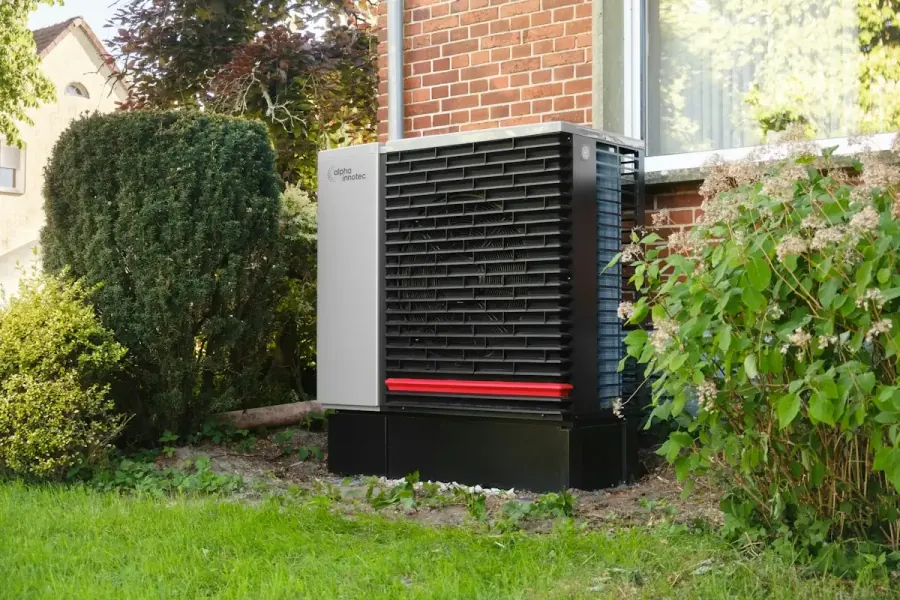
Outdoor cold-climate air source heat pump unit installed beside a brick home in Atlantic Canada

An outdoor heat pump unit on a New Brunswick home. Conversions are most often booked at the same time as a tank removal, because the heating system is already being opened up.

Buying or selling a Moncton house with an oil tank

A buried tank of unknown age will slow a Moncton closing, and the fastest way through it is a removal with a decommissioning letter rather than a negotiation. Lenders and lawyers are not trying to assess risk on your behalf, they are trying to close a file, and an open environmental question on a title is the sort of thing that sits unresolved until somebody spends money. Sellers who deal with the tank before listing consistently do better than sellers who deal with it during a conditional period, because the same work done under a deadline costs more and gets less price credit.

If you are selling

Establish first whether there is a buried tank at all. Look for a capped or cut-off fill pipe near the foundation, a vent pipe, a disc or plate in a walkway, or a rectangular patch of lawn that behaves differently in dry weather. Check whether the house was ever oil heated, since a tank can outlast the furnace by decades.

If a tank exists, price the removal before you price the house. A $3,500 line item you controlled is a better outcome than a $3,500 holdback plus a buyer's anxiety discount, and the decommissioning letter becomes a selling point in the listing rather than a condition in the offer.

If you are buying

Ask directly whether the property has ever had an oil tank, above ground or buried, and ask for the decommissioning letter if the answer is that one was removed. A verbal assurance that a tank was taken out years ago is not the same as a document naming the tank, the date and the method, and the difference lands on you at your own resale.

Where a tank is still in place, the sensible route is a written removal quote before the condition period closes so the number is known rather than estimated. An unlined steel tank installed before 1990 should be assumed to need removal, not assumed to be fine.

Where we work across Greater Moncton

Crews cover Moncton, Dieppe and Riverview as one service block, then Shediac, Salisbury, Sackville and the rural parts of Westmorland and Albert County on a scheduled basis. The three-community core sits on either side of the Petitcodiac River, which matters more than the municipal boundaries do: the same glacial till and marine clay profile runs through all of it, and the same 1955 to 1988 housing stock carries most of the buried tanks.

Moncton itself, on the west bank in Westmorland County, has the widest spread of tank vintages, from post-war infill through to late 1980s subdivisions. Dieppe, east and north of the city and also in Westmorland County, has a Francophone majority and a housing profile weighted slightly later, which means proportionally more above-ground and replacement-era tanks. Riverview sits across the river in Albert County, which is a genuinely different county administration rather than a suburb label, and its older streets carry a solid share of buried steel.

Further out, Shediac is about 25 kilometres northeast and scheduled as part of the coastal run. Fredericton at roughly 180 kilometres west and Saint John at roughly 150 kilometres southwest are served on a booked basis rather than same week, and travel is quoted transparently rather than buried in the tank price.

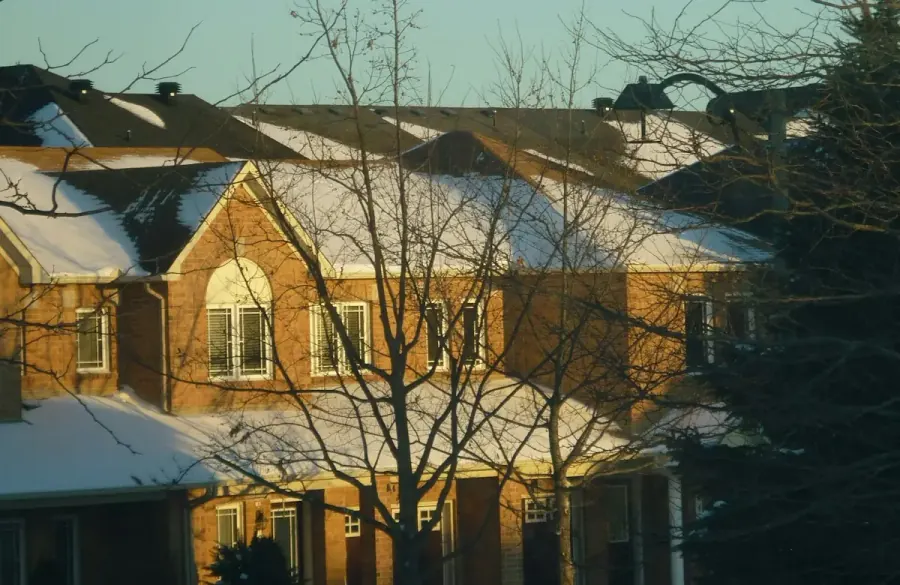
Snow covered brick suburban homes in a New Brunswick residential neighbourhood of the kind that commonly still has buried heating oil tanks

Greater Moncton housing from the buried-tank era. Homes built between the mid 1950s and the late 1980s are the ones most likely to have steel in the yard.

Why homeowners should not do this themselves

Self-performed tank removal is unlawful in New Brunswick under Regulation 87-97, and beyond the legal point it fails on three practical ones. An empty-looking oil tank is not empty, it holds vapour and a sludge layer, and putting a grinder or a torch to it is how people get hurt. The residual oil and sludge are regulated waste with a disposal route and a transfer record, not something to drain into a yard or a drum in the garage. And the entire commercial purpose of the exercise, the decommissioning letter, cannot be self-issued.

The version of this that actually happens is a homeowner who cuts up an above-ground basement tank, takes the steel to a scrap yard, and believes the problem is solved. Then a sale happens, a lawyer asks for the decommissioning record, and there is none. The tank is gone and unprovable, which is in some ways worse than a tank that is still there and documented, because now nothing can be inspected and nothing can be certified retroactively. The saving was a few hundred dollars and the cost is a condition on a closing.

If a tank has already been removed without paperwork, say so up front when you get a quote. There are assessment routes that can produce a defensible record after the fact, and they work much better when nobody is guessing about what happened.

Oil tank removal questions, answered

These are the questions that come up most often on Moncton jobs, taken from what people actually search and actually ask on site. Longer answers on cost, permits and the underground-specific work live on the dedicated pages linked below, and the full question set is on the FAQ page.

How much would it cost to remove an oil tank in Moncton?

An above-ground oil tank in a Moncton basement or on a concrete pad usually costs $500 to $1,500 to remove, and a buried tank costs $2,500 to $5,000 if the soil under it turns out clean. Those are Canadian dollars and they are all-in figures covering pumping the residual oil, cutting or lifting the tank, hauling it away, backfilling the void and issuing your decommissioning letter. The number moves when access is tight, when the tank sits under a deck or a driveway, or when soil sampling comes back showing petroleum hydrocarbon above the reportable threshold, at which point a remediation scope of $5,000 to $15,000 or more replaces the flat removal price.

How can I get rid of an oil tank at my house?

You hire a licensed petroleum tank contractor, because under New Brunswick Regulation 87-97 removing or decommissioning a fuel storage tank yourself is not legal and will not produce the paperwork your insurer and your lender need. The contractor books a date, pumps out whatever oil and sludge is left in the bottom, disconnects and caps the fuel lines to the furnace, cuts or lifts the tank out, cleans the interior, hauls the shell to a scrap processor and files the waste transfer documents. You receive a decommissioning letter naming the tank, the removal date and the method used. Selling the tank to a scrap yard yourself skips every one of those records and leaves the liability on your property title.

How do you get rid of old buried oil tanks?

A buried tank is excavated, emptied, cut open, cleaned and lifted out whole or in sections, then the hole is backfilled with clean sand or approved fill and compacted. The crew locates the tank first using the fill pipe, the vent pipe and the old supply line, exposes the top with a mini excavator, vacuums out the standing oil and water, then cuts an access port to squeegee the interior before lifting. Soil samples come from the walls and the floor of the excavation while it is still open, because once the hole is closed the only way to sample again is to dig it a second time. In-place abandonment by sand-filling is allowed in narrow circumstances where a tank genuinely cannot be reached, but full removal is what clears a real estate transaction.

What is the average lifespan of a residential oil tank?

A steel heating oil tank lasts 15 to 20 years and a fibreglass or double-wall Roth style tank lasts 20 to 25 years, with the Atlantic Canada climate pushing steel toward the short end of that band. Coastal humidity, long freeze-thaw cycles and condensation inside a partly full tank are what kill them, and the corrosion runs from the inside out, so a tank that looks fine on the outside can be within a year of weeping. Any unlined steel tank buried in the ground since the 1970s or 1980s is well past its service life regardless of how it looks at the fill pipe. If you cannot find a date plate, treat the tank as expired and get it assessed.

Do I need a permit to remove an oil tank in New Brunswick?

New Brunswick does not issue a homeowner permit for tank removal itself, but the work falls under Regulation 87-97 of the Clean Environment Act and must be done by a contractor registered to handle petroleum storage, and the City of Moncton may require a building or excavation permit when the dig goes deeper than roughly 30 centimetres or affects a structure. Your contractor pulls the municipal permit where one applies and handles the provincial notification and reporting obligations. Where contamination is found above the reportable threshold, the New Brunswick Department of Environment and Local Government becomes a party to the file and the remediation has to be documented to their satisfaction.

How long does oil tank removal take in Moncton?

An above-ground tank takes two to four hours, a clean buried tank takes four to eight hours in a single day, and a buried tank with contaminated soil takes two to five days. The single-day figure assumes the crew can get a mini excavator into the yard and that the tank is where the fill pipe suggests it is. Basement tanks sometimes run longer than the four hour estimate because the tank has to be cut into sections small enough to carry up a stairwell, and that cutting has to happen after the interior has been cleaned to remove the vapour risk. Winter work in Moncton adds time when the ground is frozen to depth.

What happens if the soil under my tank is contaminated?

The excavation widens, the affected soil is dug out and hauled to an approved receiving facility, confirmation samples are taken from the new walls and floor, and the file stays open until those come back below the guideline. Petroleum hydrocarbon above roughly 200 milligrams per kilogram is reportable in New Brunswick and triggers notification to the Department of Environment and Local Government. Cost moves from the flat removal price into the $5,000 to $15,000 band, and a plume that has reached groundwater or crossed under a foundation or a property line can go past $25,000. Most Moncton jobs do not get there. The tanks that do are the unlined steel ones that sat in the ground past 1990.

Will my insurance company make me remove my oil tank?

Most New Brunswick home insurers now decline or surcharge policies on buried tanks of unknown age, and many require a written decommissioning record before they will bind coverage on a house that has one. The trigger is usually a renewal review, a change of carrier or a sale. Insurers are not asking whether the tank leaks, they are asking whether it can, and an unlined steel tank with no date plate answers that question badly. A decommissioning letter naming the tank, the date and the method is the document that closes the file, which is why it comes standard on every removal rather than as an add-on.

Can I leave the old tank in the ground and just fill it with sand?

In-place abandonment is permitted only where full removal is not physically achievable, such as a tank under a load-bearing footing, and it is a weaker outcome than removal for a property you plan to sell. The tank is emptied, cleaned, cut open, filled with sand or an approved inert fill and documented, but the steel stays underground and the soil beneath it is never sampled, so a future buyer's lawyer or lender can reopen the question. Where there is any reasonable equipment path to the tank, removal is the answer. If your situation genuinely calls for abandonment in place, the assessment will say so in writing and explain why.

Should I replace the tank or switch to a heat pump?

Replace the tank if you intend to keep burning oil and want the lowest up-front number, and switch to a heat pump if you want to stop buying fuel, because a new tank runs $2,500 to $4,500 installed while a removal plus cold-climate heat pump conversion runs $10,000 to $18,000 before rebates. The rebate position matters less than it did: up to $2,000 on a qualifying heat pump is available through New Brunswick's Total Home Energy Savings Program, while the larger oil-to-heat-pump funding that reached $15,000 combined closed to new provincial registrations on 30 June 2026. New Brunswick oil-heat penetration has fallen from roughly 55 percent in 2005 to about 35 percent today, and the households making the jump are mostly the ones facing a tank replacement anyway, because the removal is already priced into the decision.
Get a written Moncton tank removal quote

Tell us whether the tank is buried or above ground, roughly how old the house is, and how a machine would reach the yard. You get a written figure in Canadian dollars, usually inside one business day, with the disposal paperwork and decommissioning letter already priced in.

What You Get Back
  • A written quote in Canadian dollars covering removal, cutting, cleaning, transport and disposal, with no day-of surprises.
  • A decommissioning letter naming the tank, the date and the method, which is what insurers and lenders ask for.
  • Waste transfer paperwork for the residual oil and the scrap steel, plus soil sample results if sampling was part of the job.
Get EstimateFree written quote, one business daySee Prices